

Flora Fountain stands at Hutatma Chowk in Mumbai’s Fort district, at the southern end of Dadabhai Naoroji Road. Built in 1864, the fountain combines stonework and mythological sculpture with a setting shaped by the former Bombay Fort and the city’s civic history.
- Location: Hutatma Chowk, southern end of Dadabhai Naoroji Road.
- District: Fort, Mumbai.
- From the hotel: Flora Fountain is about an 11-minute drive or a 33-minute walk from Residency Park.
- Built: 1864.
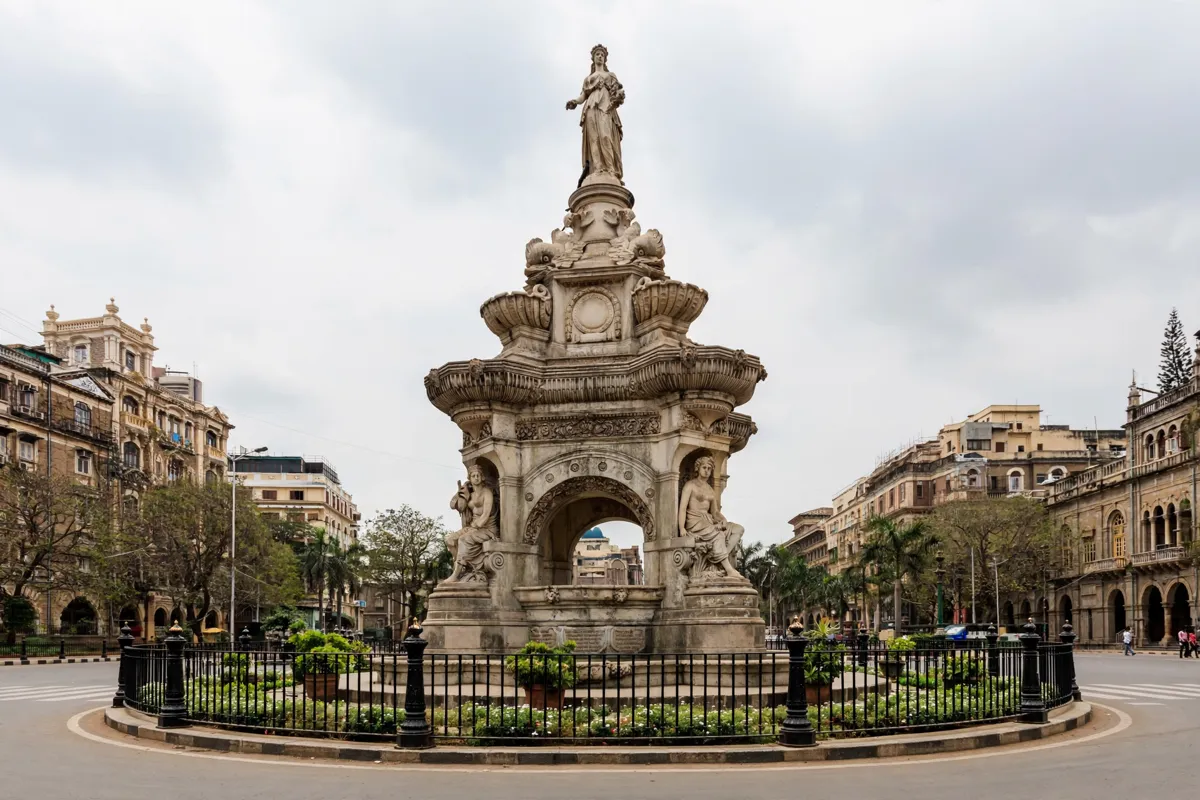
Flora Fountain and its place in Fort
Flora Fountain marks a historic crossroads in the Fort business district. It occupies the site of the old Church Gate of the Bombay Fort, where roads now meet at Hutatma Chowk.
The Brihanmumbai Municipal Corporation says the fountain was erected in honour of Sir Bartley Frere, a former governor of Bombay, and named for Flora, the Greek goddess. Its position at the southern end of Dadabhai Naoroji Road places it within the historic street pattern of Fort.
For a wider look at the district, you can pair the fountain with a walk through its streets, taking in the contrast between the landmark and the surrounding urban setting.
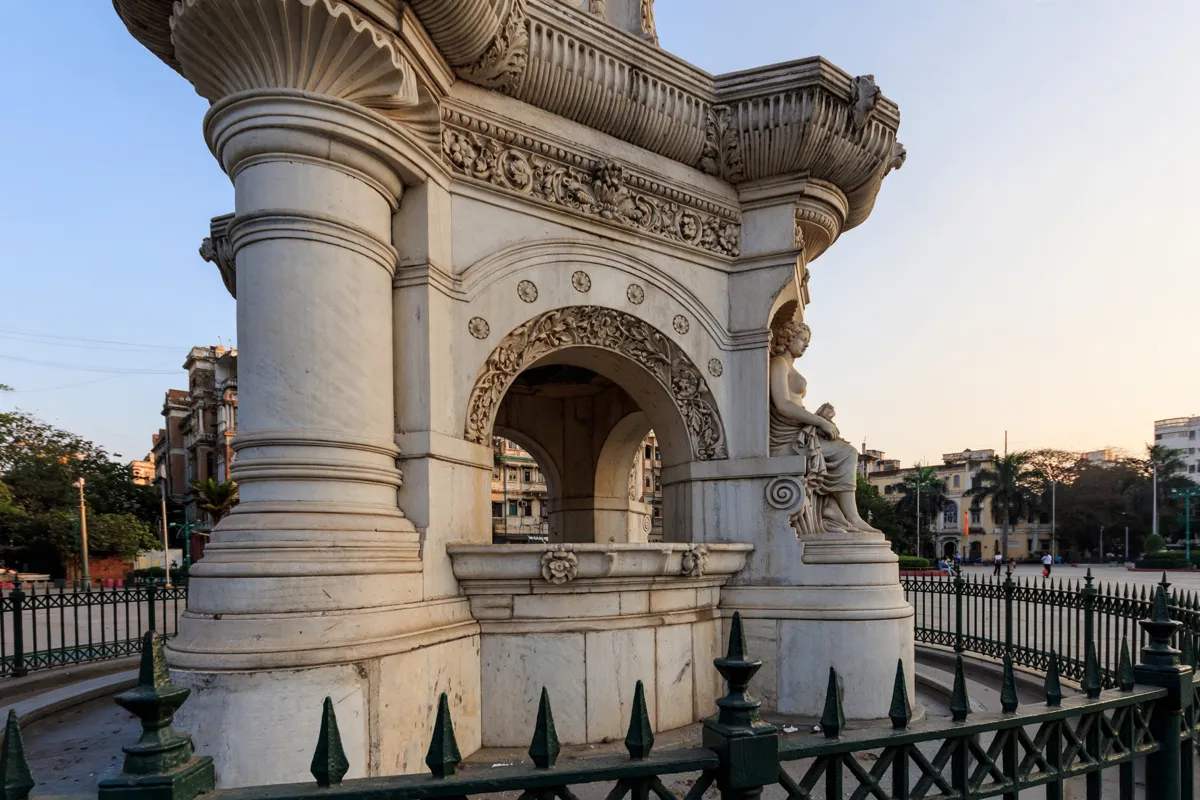
Architectural details to look for
Flora Fountain is a Portland stone structure with several layers of carved detail. Its design is attributed to R. Norman Shaw, with sculpture by James Forsythe.
Look for the low plinth and cylindrical pillars, then notice the projecting alcoves with statues, shell-shaped bowls and decorative friezes. The figures include Flora and other mythological subjects. The fountain was constructed by the Esplanade Fee Fund Committee and opened in 1869.
Restoration work on the fountain and refurbishment of the surrounding area took place from 2017 to 2019. The work formed part of conservation efforts on Mumbai’s Victorian-era fountains.
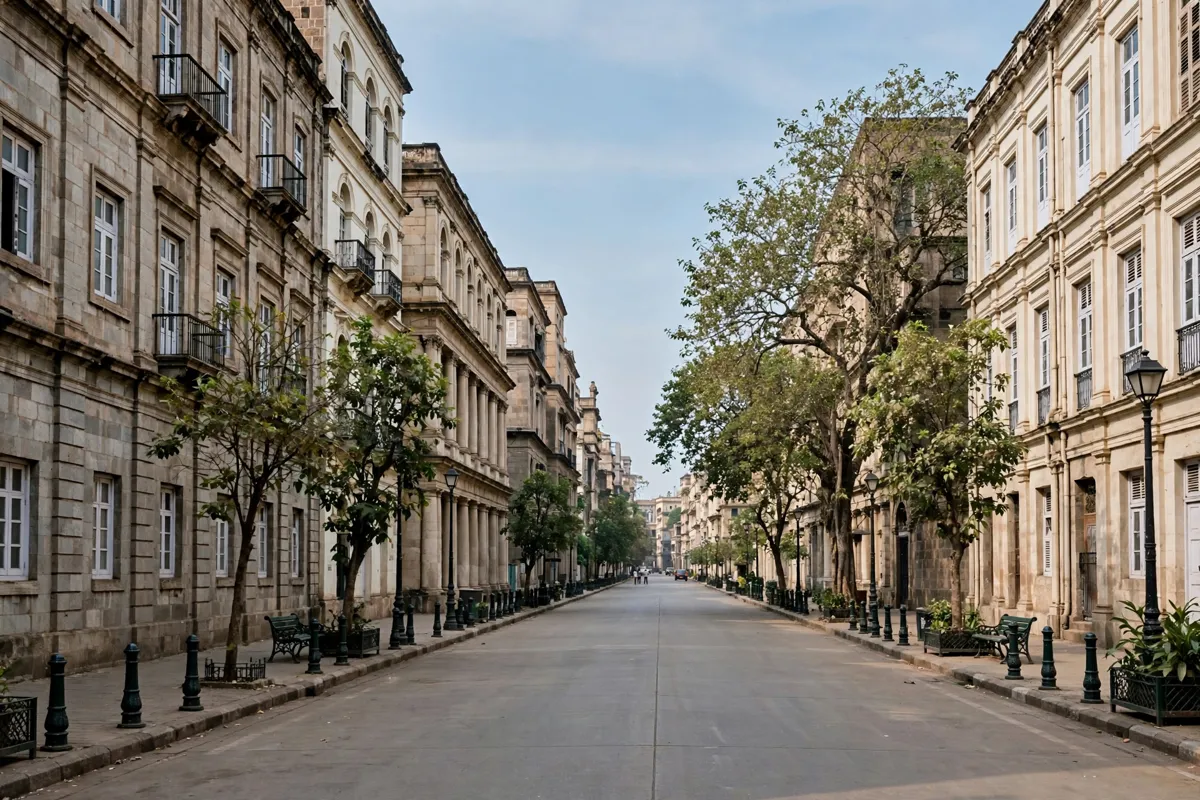
Planning a walk through the surrounding district
Hutatma Chowk is a useful point to begin a walk through Fort because Flora Fountain stands at the junction of prominent streets in the district. Take time to view the fountain from its surroundings before continuing along Dadabhai Naoroji Road.
Fort is a business district as well as a heritage area, so the fountain sits within an active city setting. The landmark’s former role as a gateway site helps explain why it occupies such a prominent crossroads.
If you are planning a broader day around central Mumbai, Crawford Market and Chhatrapati Shivaji Maharaj Terminus are also landmarks featured in guides to the city. Treat them as separate stops when arranging your route rather than assuming a particular walking connection from the fountain.
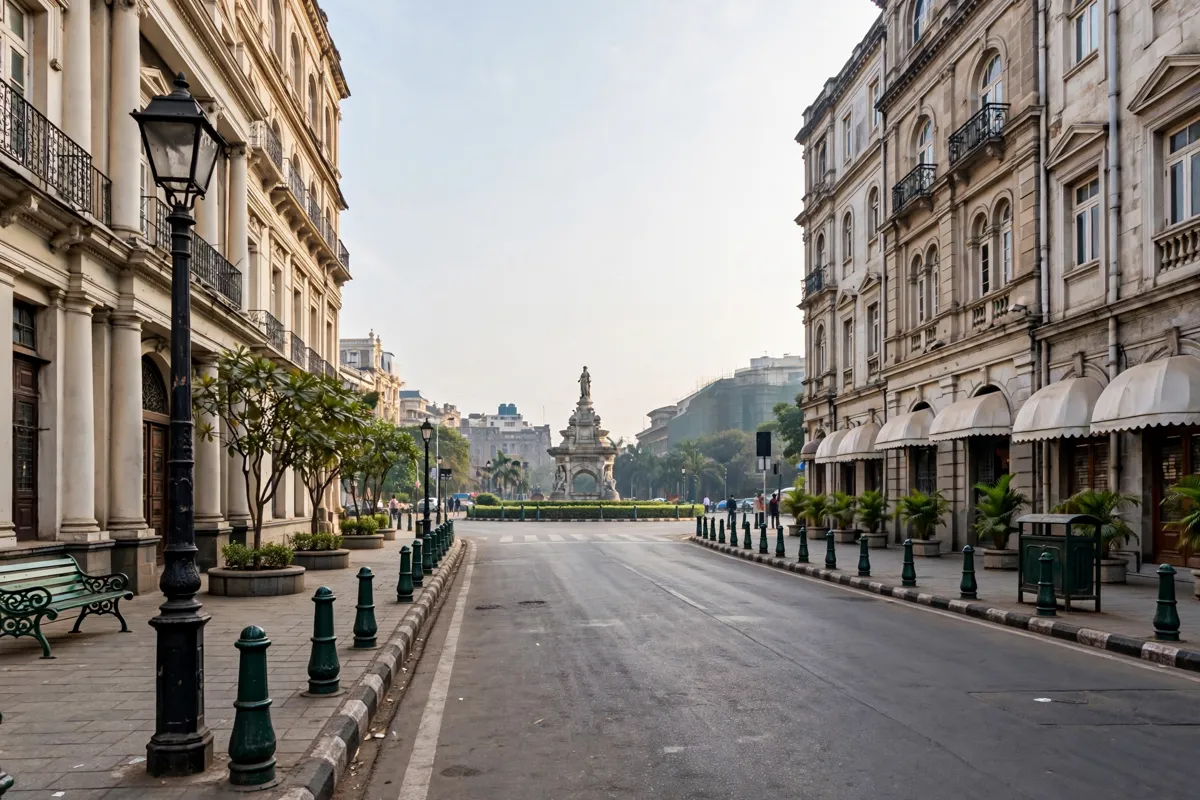
Transport, access and respectful visiting
Flora Fountain is in a busy junction, so take care when approaching and crossing the surrounding streets. The landmark is an outdoor feature in the Fort business district; allow space for the area’s everyday activity while viewing it.
The fountain’s conservation history reflects the care required for its stone surfaces and sculptural details. Avoid touching or climbing on the structure, and follow any local directions around the site.
Before you go: Access arrangements can change, so check the official site before you go.
FAQs
Where is Flora Fountain?
It stands at Hutatma Chowk, at the southern end of Dadabhai Naoroji Road in Mumbai’s Fort business district.
Who does Flora Fountain depict?
The fountain depicts Flora, the Roman goddess, along with other mythological figures.
When was Flora Fountain built?
It was built in 1864 and opened in 1869.